ADVANCED DEFENSE WORKBENCHES
Move from demonstration to decision evidence.
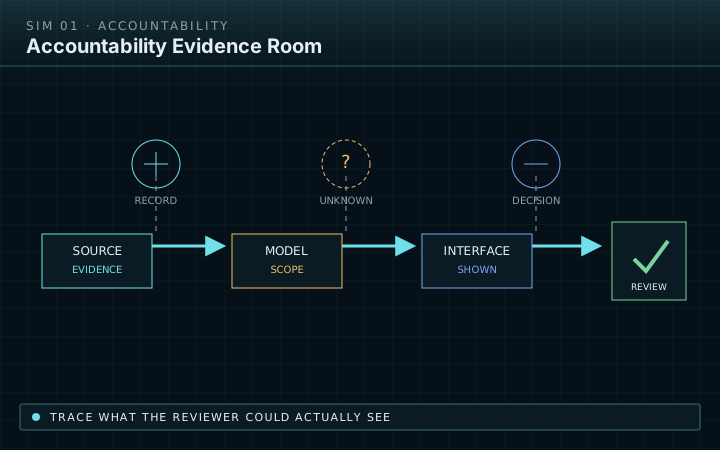
Specialized boards extend the same deterministic evidence model into authority enforcement, continuity, reconstruction, confidentiality, and industrial reconstitution.
AUTHORITY / RUNTIMEAutonomous Defense Kernel
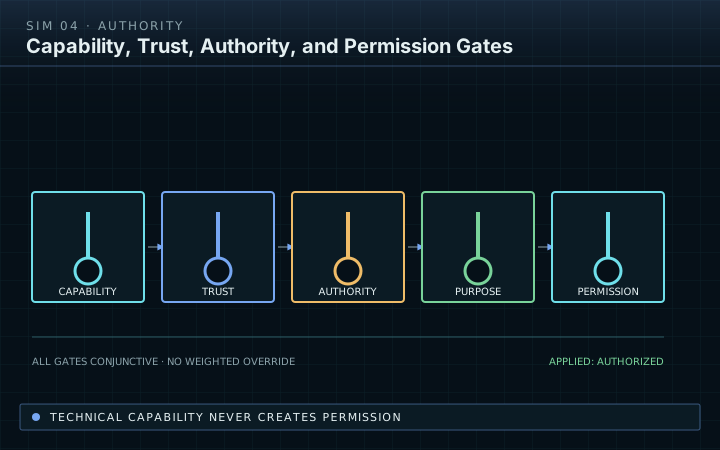
Intercept nominal requests, enforce conjunctive authority, preserve the applied action, and prove recovery.
Open kernel →
MISSION / CAUSALITYDecision Reconstruction
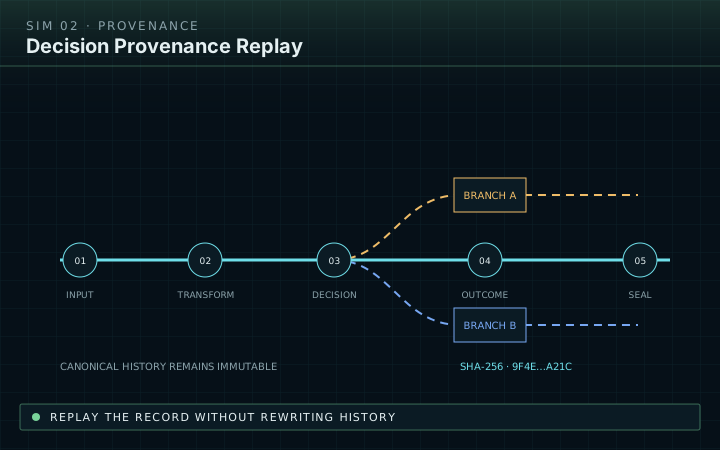
Follow evidence, uncertainty, authority, runtime assurance, review, outcome, and immutable history.
Open reconstruction →
MISSION / REVIEWDecision Review
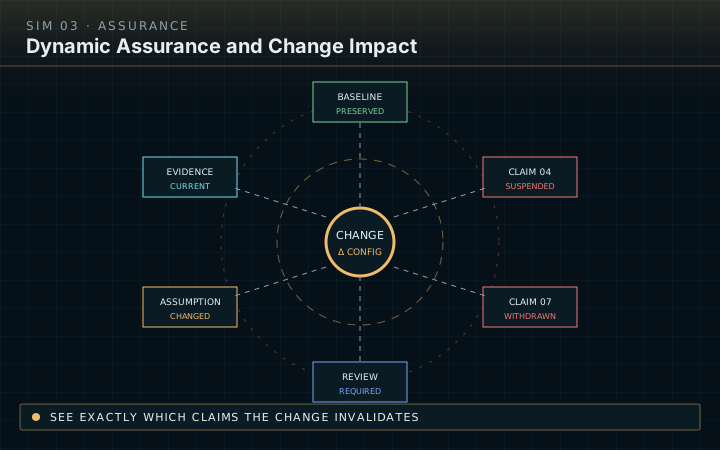
Inspect contradictory evidence, defeaters, reviewer independence, claim lineage, and bounded adjudication without rewriting source history.
Open decision review →
CONTINUITY / RECOVERYSovereign Continuity Drills
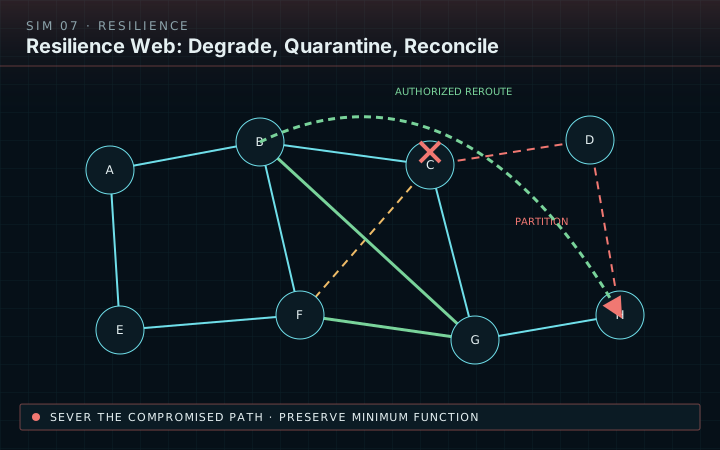
Inject bounded faults, preserve minimum sovereign function, reconcile histories, and reconstitute from an attested baseline.
Open drills →
CONTINUITY / COMPARTMENTSCompartment Continuity
Trace compromise propagation, authority state, isolation, minimum sovereign function, and attested reconstitution across isolated domains.
Open compartment continuity →
CONTINUITY / REVIEWContinuity Campaign Review
Verify exact drill packages, inspect defeaters, compare baselines, and preserve append-oriented review lineage before any baseline moves.
Open campaign review →
INDUSTRY / REPAIRIndustrial Resilience
Trace dependencies, robotic intervention, material custody, repair verification, and return-to-service authority.
Open industrial range →
INDUSTRY / FEDERATIONIndustrial Readiness Federation
Federate exact review packages across fictional estates while exposing evidence dependence, fleet capacity, custody, substitution authority, and reconstitution eligibility.
Open industrial federation →
CONFIDENTIALITY / OPSECConfidential Release Review
Generate a separately authorized derivative without exposing the protected compartment or source.
Open release review →
CONFIDENTIALITY / LINEAGEConfidential Derivative Lineage
Trace parent and child derivatives, correlation, purpose, reuse, retention, authority, and immutable release history across synthetic compartments.
Open derivative lineage →
FEDERATION / READINESSSovereign Readiness Board
Federate reviewed evidence without converting record count, package validity, or synthetic success into readiness.
Open readiness board →
INFRASTRUCTURE / RECOVERYCritical Infrastructure Campaign Review
Verify cross-site campaign evidence, expose dependence and contradictions, reconcile authority and key state, and govern recovery-baseline lineage without facility control.
Open infrastructure review →
ANSWERABILITY / FEDERATIONTechnical Answerability Evidence Federation
Verify exact source records, classify root-source dependence and correlation, align the ten causal phases, expose first divergence, and preserve claim lineage.
Open answerability federation →